

In the Global Risks Report 2026 (World Economic Forum), “extreme weather events” is ranked 4 and 1 in severity in the short (2 years) and long (10 years) terms. The Philippines is again ranked #1 out of 193 countries on the World Risk Index 2026 due to extreme exposure to typhoons, severe flooding, earthquakes, and volcanic activity alongside high socio-economic vulnerability. Strengthening disaster preparedness and response capabilities and building more resilient individuals, families, organizations, and communities have become strict matters of survival.
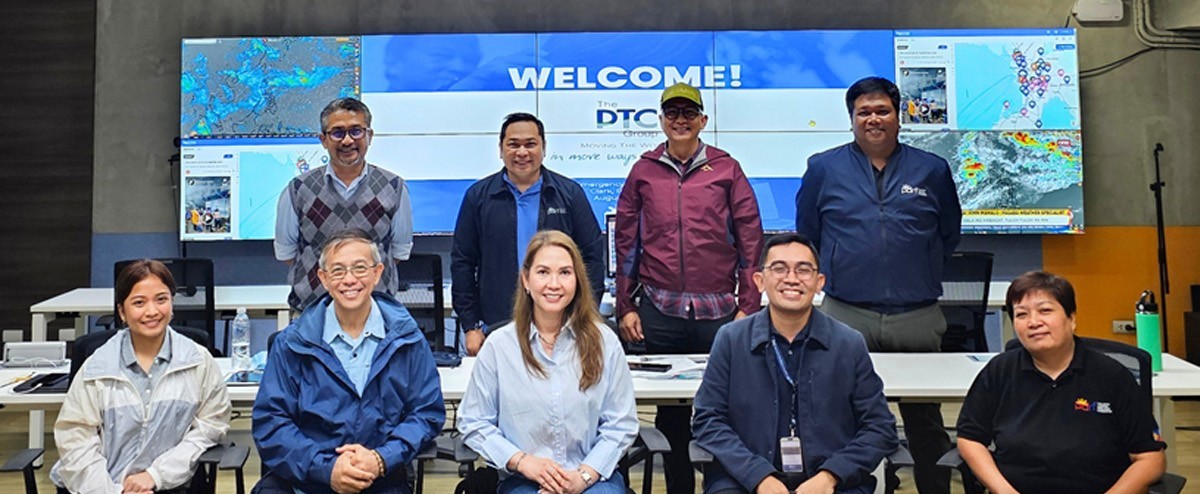
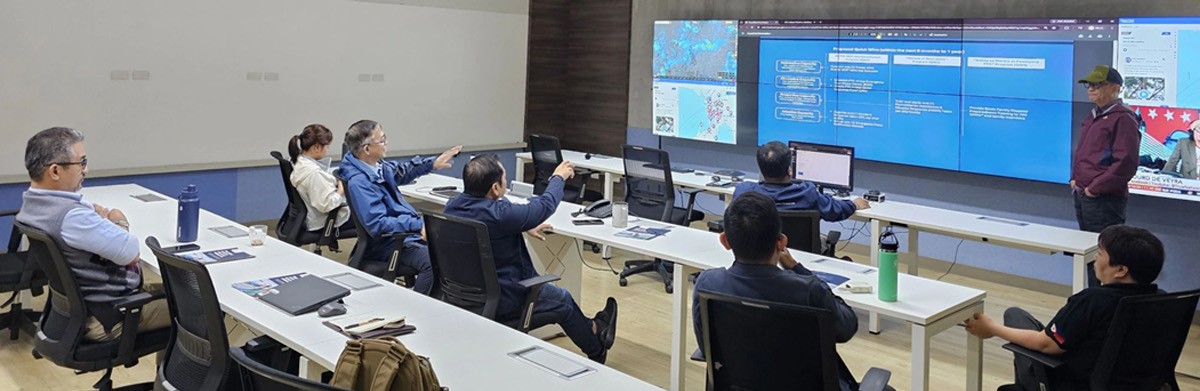
MGen Restituto Padilla Jr (Ret), together with the CPPRS-SSRB and PTC RISE Program Teams, met with officials of the Philippine Disaster Resilience Foundation (PDRF) at its Emergency Operations Center (EOC) in Clark Freeport Zone, Pampanga, on August 14, 2026, to explore strategic collaborations as the PTC Group aims to strengthen its disaster preparedness and response capabilities.
The visit to PDRF was in line with Mr. Gerardo Borromeo’s (PTC Vice Chairman and CEO) latest call to continue transforming the PTC Group into a more resilient, highly capable organization equipped to respond quickly and competently in a coordinated manner, and contribute meaningfully to national disaster resilience.
“We will realize that the work goes beyond compliance. The true measure of our level of preparedness as a Group will not be based on the number of procedures we have written. Our preparedness and response level will be seen and appreciated on the basis of the knowledge that our people possess, and the confidence, discipline, and capability to respond effectively when circumstances demand it,” Mr Borromeo underscored in his 15 July 2026 guidance note.
This latest initiative follows the “Safety as a Way of Life” exercise facilitated by CPPRS-SSRB. The exercise sought to evaluate the safety protocols across the PTC Group based on the consolidated responses of the following business units to the SAFE Review Framework Survey: PTC Logistics, PTC Aviation Training Center, PTC Inc (Building Administration), Smart Park, Health Metrics, ACM Landholdings, PHILCAMSAT, Northern Star Energy, The MAST, and First Aviation Academy. The review covered in-house and off-site activities, transportation arrangements, operational procedures, emergency preparedness, and the integration of safety controls within the Group’s Quality Management Systems.
As Mr. Borromeo emphasized in an earlier guidance note issued on 17 June 2026: “Safety is not a checklist, a report, or a compliance requirement. Safety is a way of life. It is a mindset that should guide our decisions every day. The habits we build at work should carry into our personal lives, just as the discipline we exercise in our personal lives should strengthen our professional conduct.”
The results and findings of the exercise paved the way for the promulgation of the Pre-Initiative Safety Check Standard Operating Procedure (PTCH-IMS-PRO-009) on 03 August 2026 along with the following official forms:
- Pre-Initiative Risk Assessment Checklist (This form must be completed, verified, and signed at least five [5] working days prior to the conduct of any initiative [i.e., project or activity]. No initiative shall “go live” without an approved form. Assumptions are prohibited; physical or logistical verification is required.)
- Safety Briefing Record & Attendance Log (This form must be accomplished immediately prior to the execution of any initiative. The briefing must be conducted by the Initiative Lead or Safety Officer. Verbal or undocumented briefings are considered a breach of safety protocols.)
- Incident/Hazard Report Form (This form is used to report any unsafe conditions, unsafe acts, or near-miss incidents during the conduct of any initiatives. Reports may be submitted confidentially. Systemic tracking and Corrective and Preventive Action [CAPA] tracking are managed via the Centralized Incident/Hazard Tracker and recorded in the Risk Management and Sustainability Dashboard.)
Joining MGen Padilla during the visit to PDRF were Hector Manuel Jon “Hex” Brizuela (Programs & Initiatives Manager, Resilience and Sustainability for Empowerment [RSE] Foundation, Inc), Gerry Aquino (Safety & Security Manager, PTCH), Hadassah Gabrielle “Gabbie” Balor (Special Projects Officer, PTCH), and Col Ruel Rombaoa (Ret) (Operational Excellence Officer, PTCH).
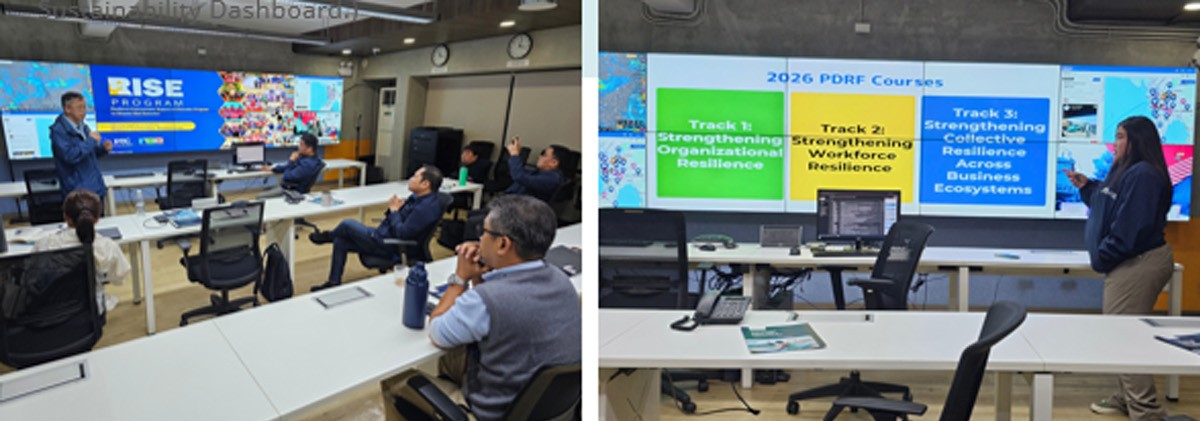
The PTC contingent was warmly received by Ms Veronica Gabaldon (PDRF Executive Director), Mr Arnel Capili (PDRF EOC Director), and Ms Karen Tria (PDRF Capacity Development Head). Mr Albert Jeffrey Lagdaan (Preparedness and Response Supervisor) and Mr Christian Bañaga (GIS Officer) provided a comprehensive briefing on PDRF’s “HANDA” or Hazard and Disaster Analysis for Business Resilience platform. Another presentation on PDRF capacity development training programs was given by Ms Johari Balaong-Cablao (Capacity Development Supervisor).
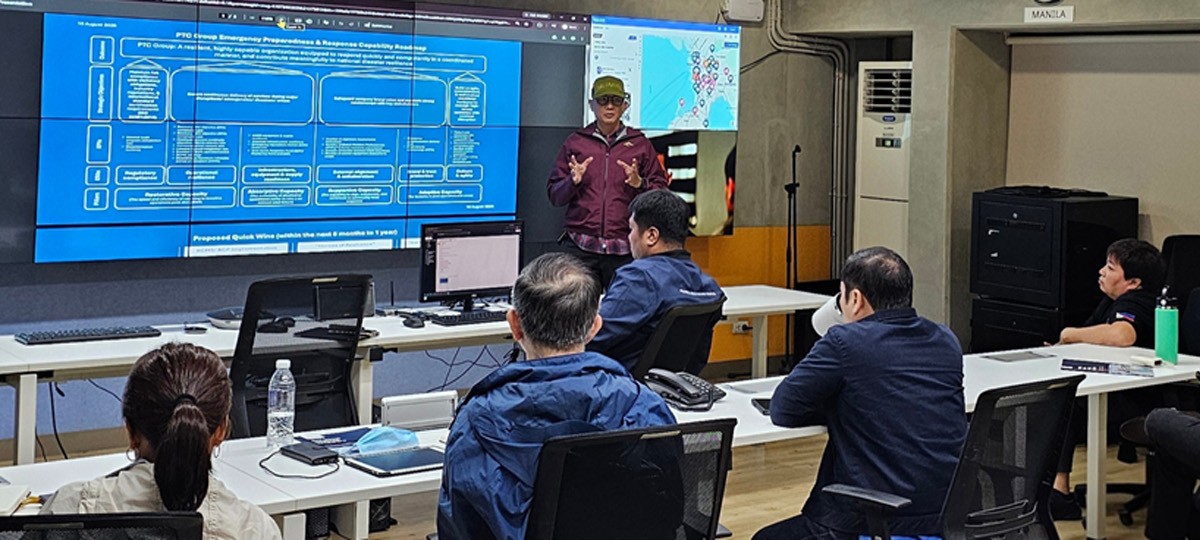
In his introductory briefing, MGen Padilla cited the PTC Group’s ongoing thrusts on resilience and highlighted its strengths primarily as a talent development platform moving the world in more ways than one across land, air, and sea. “We need to look beyond simple safety checklists and build a truly resilient organization. We want to ensure that PTC doesn’t just protect its own people, but actively stands ready as a reliable, capable node and active private sector partner in the Philippines’ national disaster response network,” MGen Padilla stated.
Col Rombaoa discussed the gist of a proposed roadmap to strengthen the Group’s disaster preparedness and response capabilities, focusing on the following pillars:
- Restorative Capacity (The speed and efficiency of returning to baseline operations post-disruption)
- Absorptive Capacity (The availability of physical or operational buffer to take a hit without total failure)
- Supportive Capacity (The capability to align, collaborate, and contribute to community-level response)
- Adaptive Capacity (The flexibility to pivot operations mid-crisis)
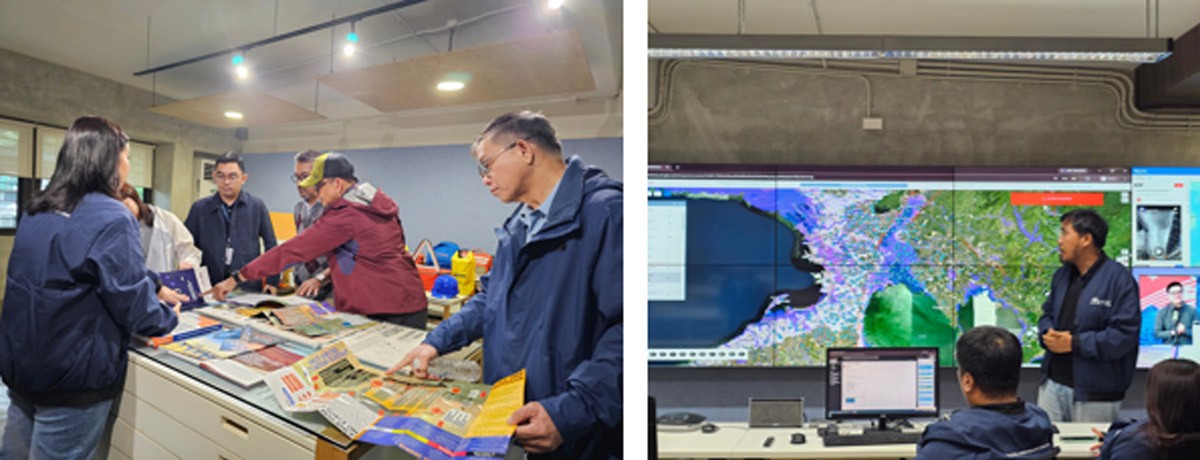
Hex Brizuela showcased the key accomplishments and milestones of the PTC RISE (Resilience Improvement, Support and Education) Program, a pioneering initiative aimed at capacitating communities, schools, and sectors on disaster risk reduction (DRR) through training and technology, enabling a localized approach to address hazard-related gaps while providing targeted, tailor-fitted solutions on disaster risks. PTC RISE so far has trained 28,177 individuals under its Citizen Training Program (CTP), oriented 546 Global Maritime Professionals™ (GMP™) and family members through Family Disaster Preparedness lectures, tapped 17 seafarer communities for program activation, engaged 460 barangays, partnered with 148 educational institutions, certified 930 under its Master Trainer Program (MTP), and activated 15 volunteer networks for DRR activities.
In his closing remarks, Mr Capili stressed the need to consolidate the speed, skill, and solidarity of the private sector to create more meaningful and lasting impact on the ground. He also expressed the eagerness of the PDRF to pursue the following areas of collaboration with the PTC Group:
- Capacity-building (the MAST facility in Maragondon, Cavite can be developed as a joint resilience training hub or as a center of excellence and development in disaster response; PDRF intends to donate 50 Emergency Medical Response packs to organized and trained PTC Incident Response Teams or IRTs)
- Data and information sharing (PDRF is willing to grant PTC free access to basic capabilities of the HANDA platform, scalable to paid access to the platform’s automated staff/employee welfare accounting system)
- Disaster response operations (PDRF can provide assistance in procuring, storing, repacking, dispatching, and transporting relief goods through its supply chain and logistics network)
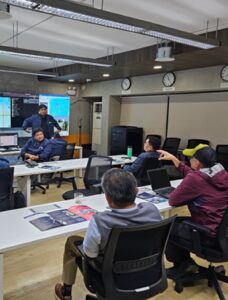
With enough support, volunteer employees trained under “Heroes of Resilience” can be mobilized as BU-level IRTs and later clustered and transitioned to site- or facility-based Humanitarian Assistance and Disaster Response (HADR) Teams. The program can likewise enable employees to boost their individual knowledge and confidence scores (i.e., employees should be able to demonstrate practical knowledge of evacuation plans, emergency protocols, and initial response actions beyond manual reading), thus enhancing the Group’s overall disaster preparedness and response culture and agility index. “Gabay sa Marino at Pamilyang PTC” also aligns with the strategic objective to safeguard the company’s brand value and maintain strong relationships with key stakeholders. Sustaining the program’s success by growing at scale the number of capacitated GMPs and family members ultimately enhances the Group’s external alignment and collaboration efforts.
With enough support, volunteer employees trained under “Heroes of Resilience” can be mobilized as BU-level IRTs and later clustered and transitioned to site- or facility-based Humanitarian Assistance and Disaster Response (HADR) Teams. The program can likewise enable employees to boost their individual knowledge and confidence scores (i.e., employees should be able to demonstrate practical knowledge of evacuation plans, emergency protocols, and initial response actions beyond manual reading), thus enhancing the Group’s overall disaster preparedness and response culture and agility index. “Gabay sa Marino at Pamilyang PTC” also aligns with the strategic objective to safeguard the company’s brand value and maintain strong relationships with key stakeholders. Sustaining the program’s success by growing at scale the number of capacitated GMPs and family members ultimately enhances the Group’s external alignment and collaboration efforts.
Tags: