

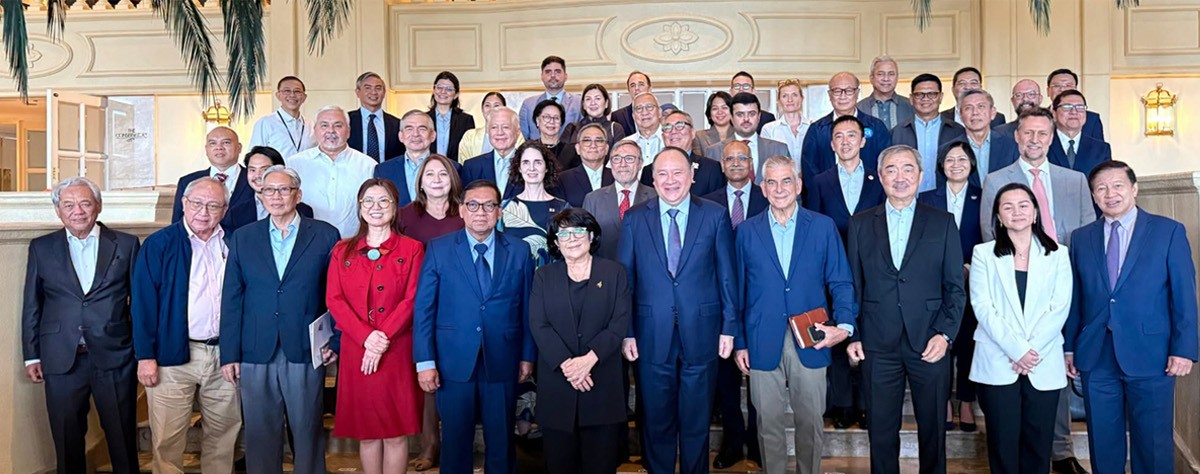
PTC participated in the Engineering Resilience: Building to Last Summit on August 24, 2026, at The Peninsula Manila, a multi-sector gathering of senior government officials, private-sector leaders, academe, civil society, and international partners focused on strengthening national earthquake resilience.
Convened by Secretary Maria Antonia “Toni” Yulo Loyzaga, Special Envoy of the President for Disaster Risk Reduction and Management, the Summit emphasized the need to move beyond traditional disaster response by reducing systemic risk, protecting critical infrastructure and services, and strengthening coordination across sectors. It also served as a preparatory platform for a National Public-Private Partnership for Earthquake Resilience.
The Summit was designed around two complementary components: a High-Level Dialogue with senior government and industry leaders, and a broader Earthquake Resilience Forum with plenary discussions and sector-focused breakout sessions.
High-Level Dialogue
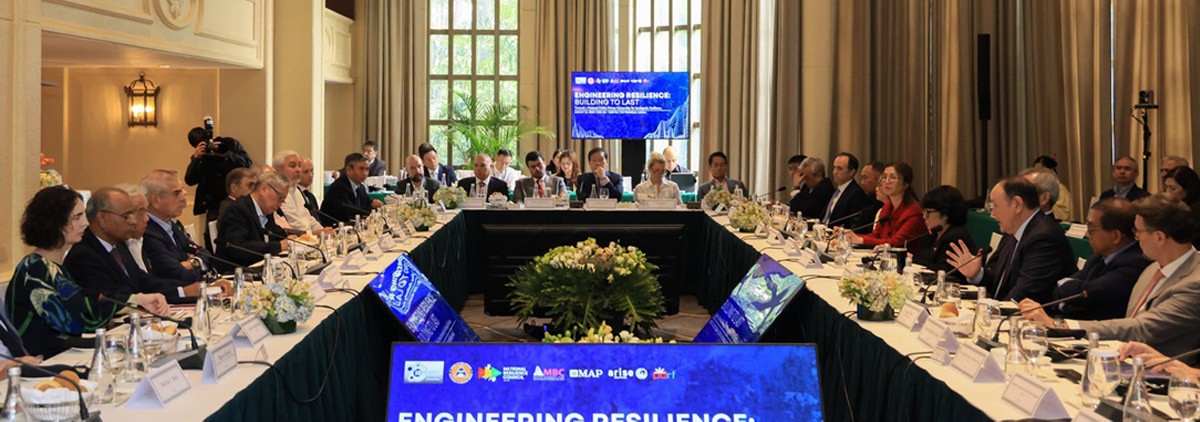
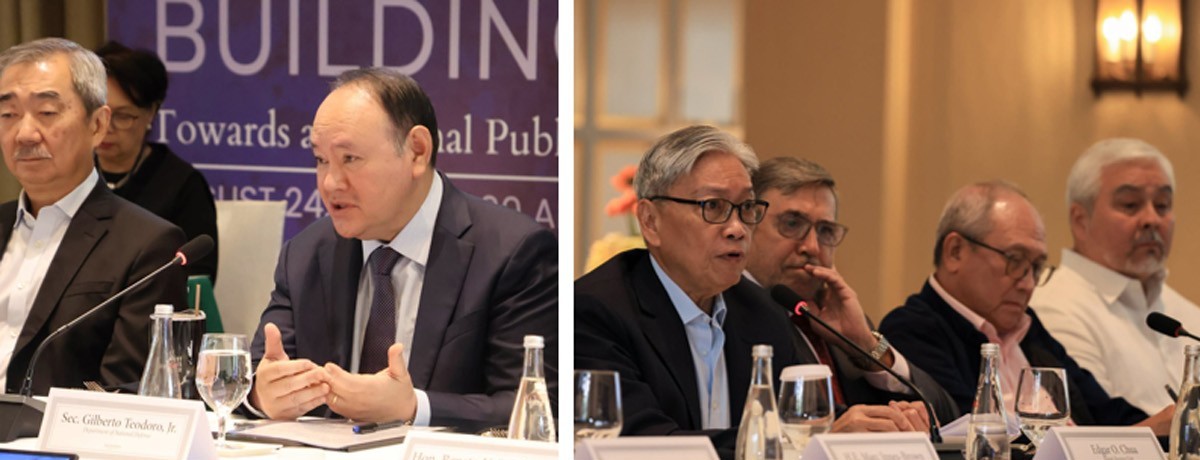
The High-Level Dialogue was led by Secretary Gilberto C. Teodoro Jr., Secretary of National Defense and Chairperson of the National Disaster Risk Reduction and Management Council (NDRRMC), and focused on preparedness, resilience investments, critical infrastructure, and the role of the private sector in national disaster response and recovery.
Secretary Teodoro emphasized anticipation, preparedness, and coordinated response, including the prepositioning of vital supplies and capabilities, strategic inventory areas, and the protection of critical infrastructure and essential services. He also underscored the need for stronger public-private partnerships and deeper industry participation in disaster resilience.
The dialogue further highlighted the importance of identifying minimum levels of functionality for government, critical facilities, utilities, and infrastructure to help ensure the continued movement of goods and people following a catastrophic earthquake or tsunami.
The High-Level Dialogue was attended by Mr. Gerardo A. Borromeo, PTC Chief Executive Officer, and MGEN Restituto F. Padilla Jr., AFP (Ret.), Executive Director for Corporate Public Policy, Risks and Sustainability.
Earthquake Resilience Forum
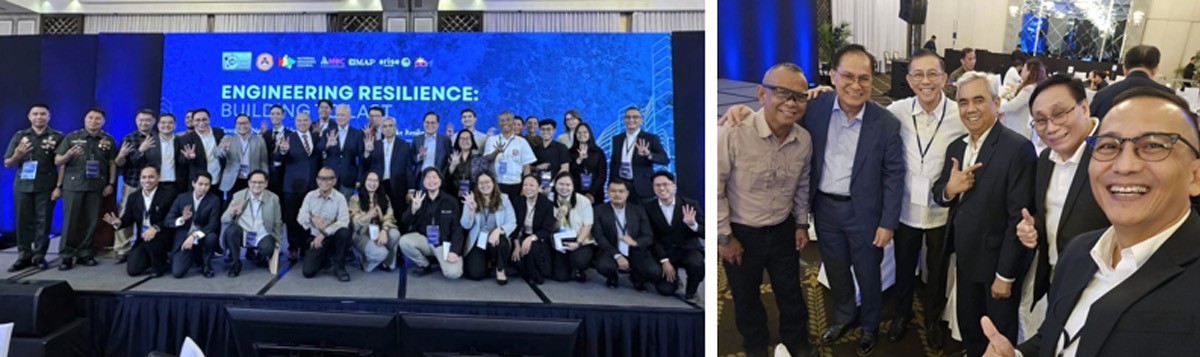
The Forum examined how science, risk data, technology, contingency planning, and business continuity can strengthen preparedness for large-scale seismic events.
Secretary Renato U. Solidum Jr., Secretary of Science and Technology, presented national earthquake hazard scenarios and the country’s science and technology strategy, while Usec. Harold Cabreros, Civil Defense Administrator and Executive Director of the NDRRMC, discussed the National Harmonized Contingency Plan for Earthquakes. The program also featured international and private-sector perspectives on resilience technologies, business continuity, emergency management, and local preparedness.
PTC’s representatives to the Forum were MGEN Padilla, Col Ruel G. Rombaoa, Operational Excellence Manager, and Ms. Gabrielle S. Balor, Special Projects Manager for Corporate Public Policy, Risks and Sustainability. They contributed to discussions on the resilience of the transport sector, including the interdependencies among transport systems, infrastructure, utilities, communications, and other essential services, as well as on preparedness for response and recovery following a major seismic event.
Resilience Lessons from the Forum
The Summit underscored that earthquake resilience depends on understanding how risks unfold across space, how critical networks and services depend on one another, and where failures can cascade across systems.
In her closing message, Secretary Loyzaga emphasized the importance of spatial understanding, network criticality, and the interconnectedness of infrastructure, services, and communities. She also stressed that resilience planning must account for the needs of the most vulnerable and be grounded in data-driven decision-making to guide preparedness, investment, response, and recovery.
These lessons reinforce the role of the transport sector as a critical enabler of national resilience. Maintaining the movement of people and essential goods during disruption will require not only business continuity and redundancy, but a deeper understanding of how transport depends on power, communications, fuel, infrastructure, and government services. Strengthening these linkages through better data, alternative routes and facilities, and closer public-private coordination will be essential to supporting both emergency response and early recovery.
Tags: