

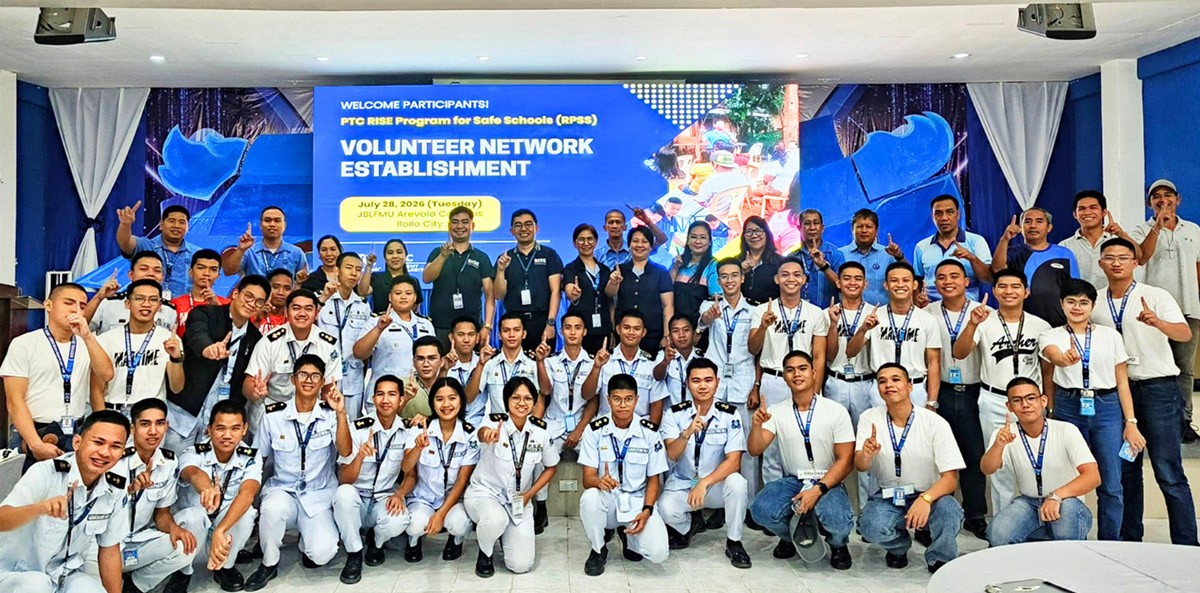
The PTC Group, through the PTC RISE Program, successfully launched the RISE Program for Safe Schools (RPSS) Volunteer Network in four (4) major Maritime Higher Educational Institutions (HEIs) in Iloilo City, Western Visayas, and Bacolod City, Negros Island Region, from July 28 to 31, 2026.
Iloilo City saw the activation of two (2) RPSS Volunteer Networks in Iloilo City, through collaborations with John B. Lacson Foundation Maritime University (JBLFMU) Arevalo and Molo Campuses, while Bacolod City witnessed the activation of another two (2) RPSS Volunteer Networks through partnerships with John B. Lacson Colleges Foundation (JBLCF) Bacolod and VMA Global College and Training Centers.
Led by PTC Talent Acquisition Group – Pipeline Engagement Programs (TAG-PEP) Program Manager Hector Brizuela, together with Lead Program Officer Josh McCarver, more than 100 volunteers in Iloilo City and almost 100 volunteers in Bacolod City were officially added to the existing pool of RISE Program Volunteers across the Philippines.
PTC RISE Program for Safe Schools has now been actively tapping Maritime Higher Educational Institutions (HEIs) in its effort to consolidate and rally the maritime industry and become more engaged in community development through Disaster Risk Reduction (DRR). Starting DRR interaction early in educational institutions and schools not only influences students to hone skills and nurture talents, but it also immerses them in being more proactive and responsible citizens while embodying the maritime industry’s core values of safety and security, for their individual and families’ welfare against hazards and disasters.
Active Disaster Resilience Volunteerism in the City of Love
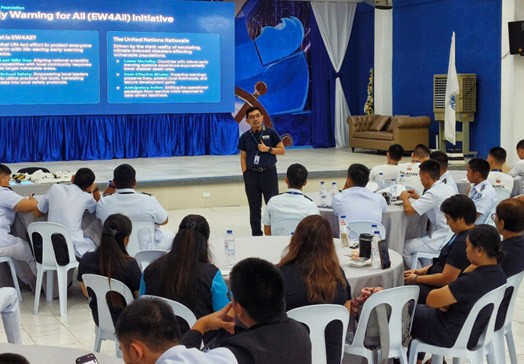
PTC TAG-PEP team led the activation of RISE Program for Safe Schools (RPSS) Volunteer Network Establishment and Masterclass Session in Iloilo City, Western Visayas, through the John B. Lacson Foundation Maritime University (JBLFMU) Arevalo and Molo Campuses last July 28, 2026.
The morning session at JBLFMU Arevalo was attended by 45 members of the Disaster Risk Reduction (DRR) Unit, composed of teaching and non-teaching personnel, student leaders and volunteers, the program started through volunteer network orientation where expectations were set on how the DRR volunteer group will function and how the members can contribute to further strengthening the DRR capacities of the campus.
JBLFMU Arevalo Academic Assessment Office Head and Safety Officer 2M Karl Danielle Sira encouraged the DRR Unit members to be actively involved in the RPSS Volunteer Network. “On behalf of JBLFMU Arevalo, I personally thank the PTC Group and appreciate the PTC RISE Program for their continuous collaboration with us. What they do and bring to our campus is of great help, especially in our initiative to strengthen our DRR capacities. This type of collaboration does not happen to any educational institution, and in return, as DRR Unit and RPSS Volunteer Network members, we should do what is needed to ensure our safety and our campus’ safety against hazards and disasters”.
After the RPSS Volunteer Network Establishment, an RPSS Masterclass Session on Simple Tools for Hazard and Risk Monitoring was delivered by PTC TAG-PEP Program Manager Hector Brizuela, where he emphasized the role of the JBLFMU Arevalo DRR Unit and RPSS Volunteer Network in influencing the DRR landscape of the campus. “As JBLFMU Arevalo DRR Unit and the RPSS Volunteer Network members, you have a great responsibility in ensuring the safety of the whole school community against hazards, disasters, and risks. Through the simple tools I introduced, hopefully you may be more empowered and informed on how you can actively prepare yourselves, your families, and your campus, and at the same time, proactively respond to any emergencies or incidents that might possibly happen.”
The RPSS Masterclass Session was an eye-opener for the RPSS Volunteer Network members, which focused on readily accessible DRR platforms and tools that they can utilize to monitor and assess the weather and risks that are present in JBLFMU Arevalo and in their homes.
The RPSS Masterclass Session was also timely, since JBLFMU Arevalo is eyeing to activate its own Emergency Operations Center (EOC) within the campus, supported by the City Government of Iloilo through the Iloilo City Disaster Risk Reduction and Management Office (CDRRMO), to aid in DRR activities monitoring in Arevalo District.
The afternoon session in JBLFMU Molo campus was an equally active and participative one, attended by 60 first-year National Service Training Program (NSTP) students and Reserve Officers’ Training Corps (ROTC) leaders.
In the RPSS Volunteer Network orientation, the students were encouraged to take part and explore possible opportunities through DRR volunteering within the JBLFMU Molo campus. They were also capacitated on what they can do as active RPSS Volunteer Network members.
JBLFMU Molo Unit Safety Officer Rex Castañeda highlighted the importance of the first-year NSTP and ROTC students’ active engagement as DRR volunteers in the campus through the RPSS Volunteer Network. “Dealing with hazards and disasters involves everyone’s safety and our lives at risk. By volunteering under the RPSS Volunteer Network, you can help us ensure that in times of hazards and disasters, there will be no casualties. As first-year students, you must know early on that all of us are vulnerable to hazards and disasters, including your families. Becoming involved in these DRR activities gives you an advantage in terms of skills and competencies you can acquire, and the opportunity to help yourselves, your families, and serve others.”
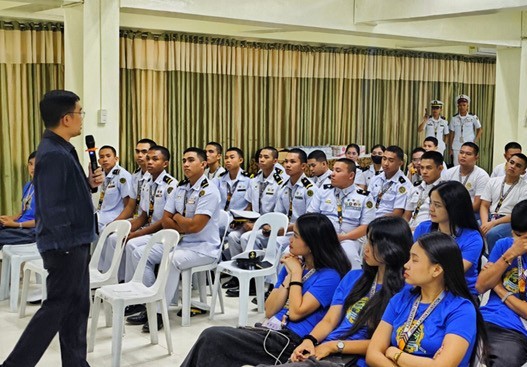
An RPSS Masterclass Session on Youth Disaster Preparedness was also facilitated by PTC TAG-PEP Program Manager Hector Brizuela, raising awareness and consciousness among first-year NSTP and ROTC students on what they can do as youth in contributing to Disaster Resilience. “The youth have long been seen as victims in the context of Disaster Risk Reduction, when in fact we can harness their skills, talents, and potential in achieving Disaster Resilience. A great example of this is evident through the youth’s proficiency in using social media and technology, which can be very useful in sharing critical, essential, and truthful information about hazards and disasters.”
Special thanks to the JBLFMU System, headed by its Chief Executive Officer (CEO) Dr. Ronald Raymond Sebastian and DRRM Focal Person Capt. Jorge Aborde, with JBLFMU Arevalo Campus Administrator Mr. Robert Parcia and JBLFMU Molo Campus Administrator Engr. Roberto Neal Sobrejuanite, for making this activity and collaboration possible.
Tags: